Farm & Folk Dye Flower Recipes
Here are some basic recipes for dyeing cellulose fabrics such as linen, cotton and hemp with the dye flowers I offer here on my website. The natural dye process for cellulose based fibers is slightly different than the process for dyeing protein based fibers such as wool and silk, but I hope to add some protein fiber dye recipes to the blog in the future.


scour—>tannin—>mordant
All fabrics whether new or repurposed must be scoured as a first step. My scouring process is explained in a previous blog post which you can find here. Cellulose fibers require a two step mordanting process, first a soak in a tannin bath, then the mordant bath. This post explains my favorite method of mordanting cellulose fabrics. Keep in mind that the tannin species you choose will affect the color you achieve. For these flower dyes I suggest choosing a yellow tannin such as myrobalan, or a clear gallnut tannin, but it would be fun to experiment with other color tannins to broaden the palette. I talk a lot about tannins in my book Farm & Folk Quilt Alchemy if you’re interested in going down a tannin rabbit hole.
flower dye recipes
Once your fabric has been scoured, and properly mordanted it’s time for the exciting part which is applying natural dye. When I set up a dye bath I most often begin with a strong WOF ratio and then work through the exhaust dye baths to achieve a gradation of color on several yards of mordanted fabric. I explain that method in this post. The following WOF ratios are vague because the ratio depends on your personal shade preference. Choose the highest percentages for the most saturated colors and a lower percentage for less saturated pastel hues. These WOF percentages are for dried flowers. If you have an abundance of homegrown fresh flowers you might want to experiment with using 100% WOF or more. Be sure to check out the other post I wrote about dyeing with flowers Natural Dyeing with Dye Flowers which explains how you can create saturated shades without increasing the amount of dyestuff!
Marigolds 25-50%
Dyer’s Coreopsis 25-50%
Sulfur Cosmos 25-50%
Calendula 50-100%
Dyer’s Chamomile 25-50%
SCABIOSA 25-50%
BLACK HOLLYHOCK 25-50%
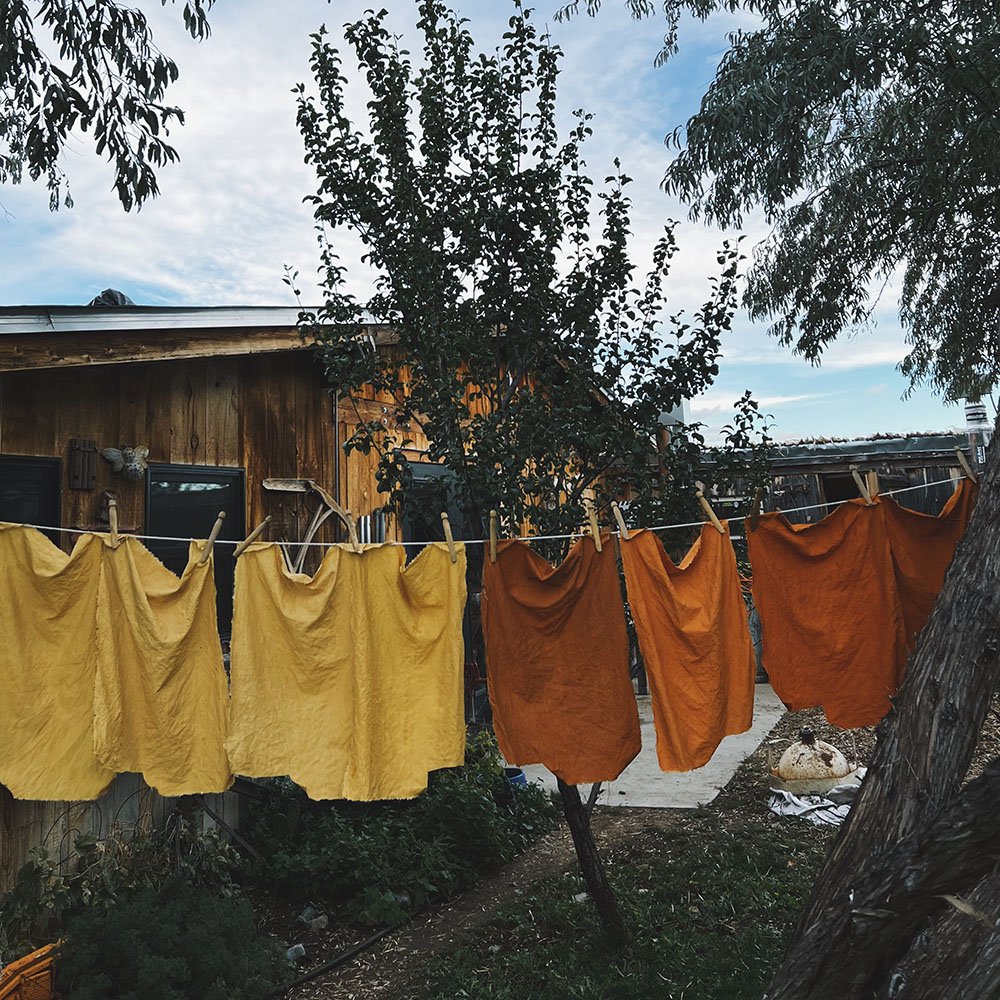
To set up the dye baths fill your dye pot with water and bring the heat to about 120°F then add the flowers. Slowly bring the heat up to 160°F and add the mordanted fabric. Bring the temperature up to about 180°F (just under a boil) and hold it there for at least an hour making sure to stir often and keep the fabric fully submerged. After an hour if you’re happy with the color you’ve achieved, carefully remove the fabric, rinse it once in cool water and hang it to dry. If you want to dye lighter shades add a piece of mordanted fabric to the exhaust dye bath and hold it at 180°F for an hour. Each exhaust bath will yield a slightly lighter shade. My natural dye tutorial post explains in greater detail how to create a gradation and how to modify it with iron to broaden your palette.


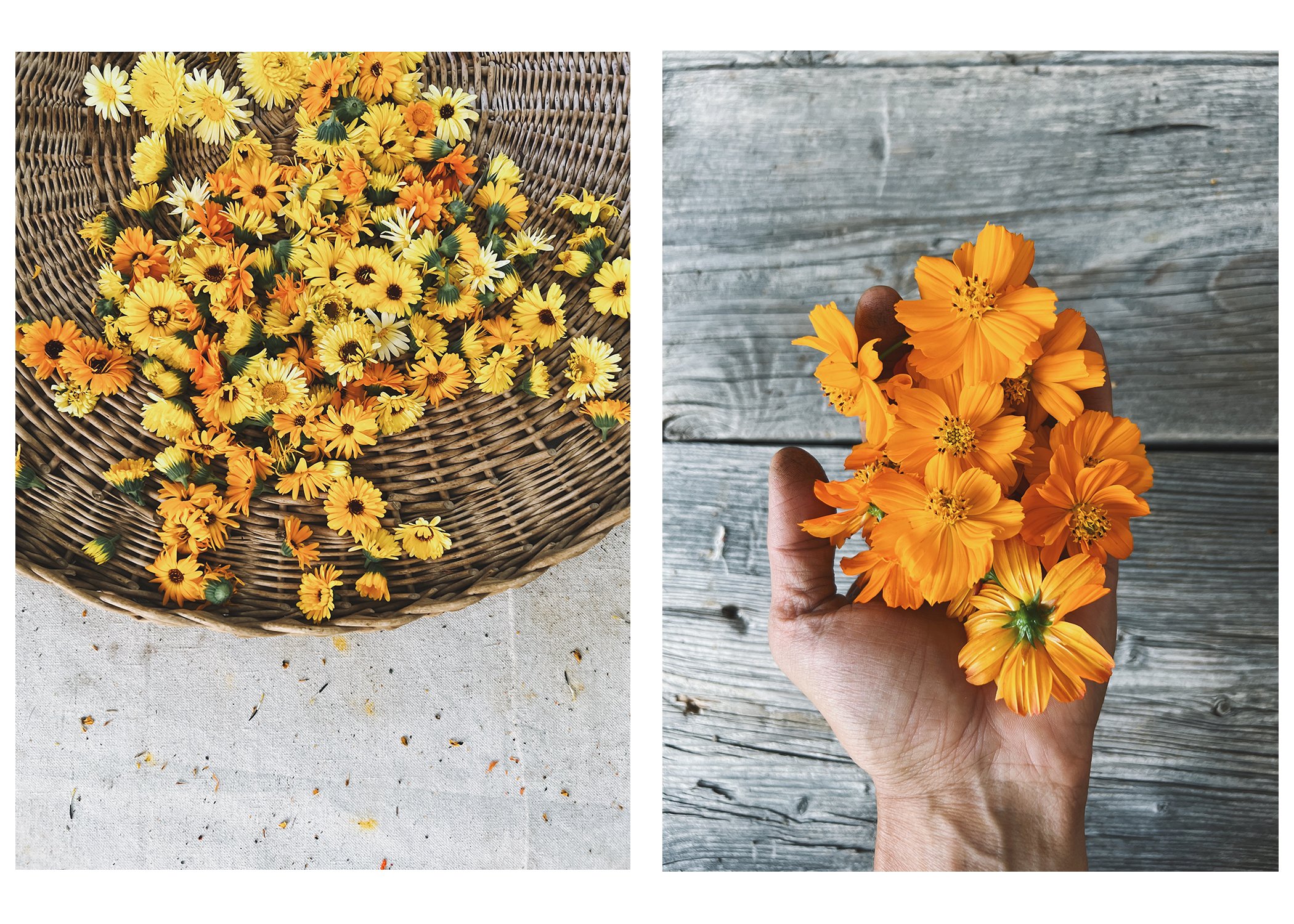

If you’re interested in learning more about dyeing with flowers, I sell a flower dye recipe PDF in my shop that shares more extensive information including how to modify the colors with iron and indigo to expand your palette and how to achieve more stable results. I have lots of dye flowers available in the shop . Cheers!

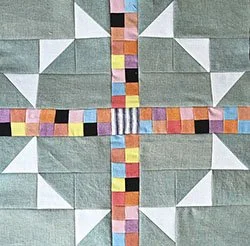
This is the dye flower bundle you’ll need if you would like to naturally dye and make The Folk Garden Quilt!
This bundle includes:
50 grams dyer's coreopsis
50 grams calendula or Rubenza Cosmos
50 grams whole marigold flowers
50 grams sulfur cosmos
*Please note: I didn’t have very much calendula this season so I’m substituting Rubenza Cosmos on some orders, which yield a very similar shade. If your order includes Rubenza Cosmos instead of Calendula, just follow the calendula dye recipe but use the Rubenza Cosmos.
If you are planning to naturally dye and make The Folk Garden Quilt you will also need to purchase the coordinating The Folk Garden Quilt Dye Flower Recipe PDF,and The Folk Garden Quilt pattern PDF.
If you follow the instructions in the dye recipe PDF to dye a gradation with each flower variety by working your way through the exhaust dye baths, you will have lots of extra fabric left over after making the Folk Garden Quilt to use for other projects.
These flowers were grown, harvested, and cured by Sara here in southwestern Colorado on Ancient Future Farm. Our family has been tending this land and soil with regenerative growing methods since 2005. Our soil is nurtured through extensive cover cropping and our crops are fertilized with compost that we make right here on site. We never use synthetic chemicals such as herbicides, pesticides, chemical fertilizers, or fungicides. Our dye flowers are harvested every day by hand when they reach their optimal potential and then carefully cured in our curing room out of direct sunlight. All of our natural dyestuffs are packaged in heat sealed envelopes to keep them fresh. For best results we recommend using them within a year.
If you’re making The Folk Garden Quilt and doing the natural dye work, you will need this recipe PDF along with The Folk Garden Quilt pattern, and the Dye Flower Variety Bundle.
This PDF contains natural dye recipes for dyer’s coreopsis, sulfur cosmos, marigolds and calendula. The recipes are exclusively intended for cellulose fabrics such as cotton, linen and hemp. The process of dyeing protein fibers is different so the recipes are not interchangeable. This is not a beginners guide to natural dyeing. The recipes are intended for those with prior natural dye experience who have an understanding of the most basic natural dye processes.
PDF contents:
A list of necessary tools and supplies. How to create ombré gradients on fabric yardage with each dye bath, and then how to modify the gradients with either iron or indigo to expand your palette. How to set up an iron bath to “sadden” the gradient shades at specific WOF percentages. How to create specific shades via over-dyeing with indigo. Setting up an indigo vat is not covered but I include links to resources for that. Also included is information explaining how to stabilize the flower colors after dyeing for optimal colorfastness results.
The PDF document is 14 pages of text and photographs.
*Please note that the calendula I offer in this year’s Dye Flower Variety Bundle is a different variety than the one I grew in years prior so it looks different than the one shown in the photos of this PDF. The new variety yields a similar yet greener color than the previous variety I offered.