Natural Dyeing with Rudbeckia Flowers
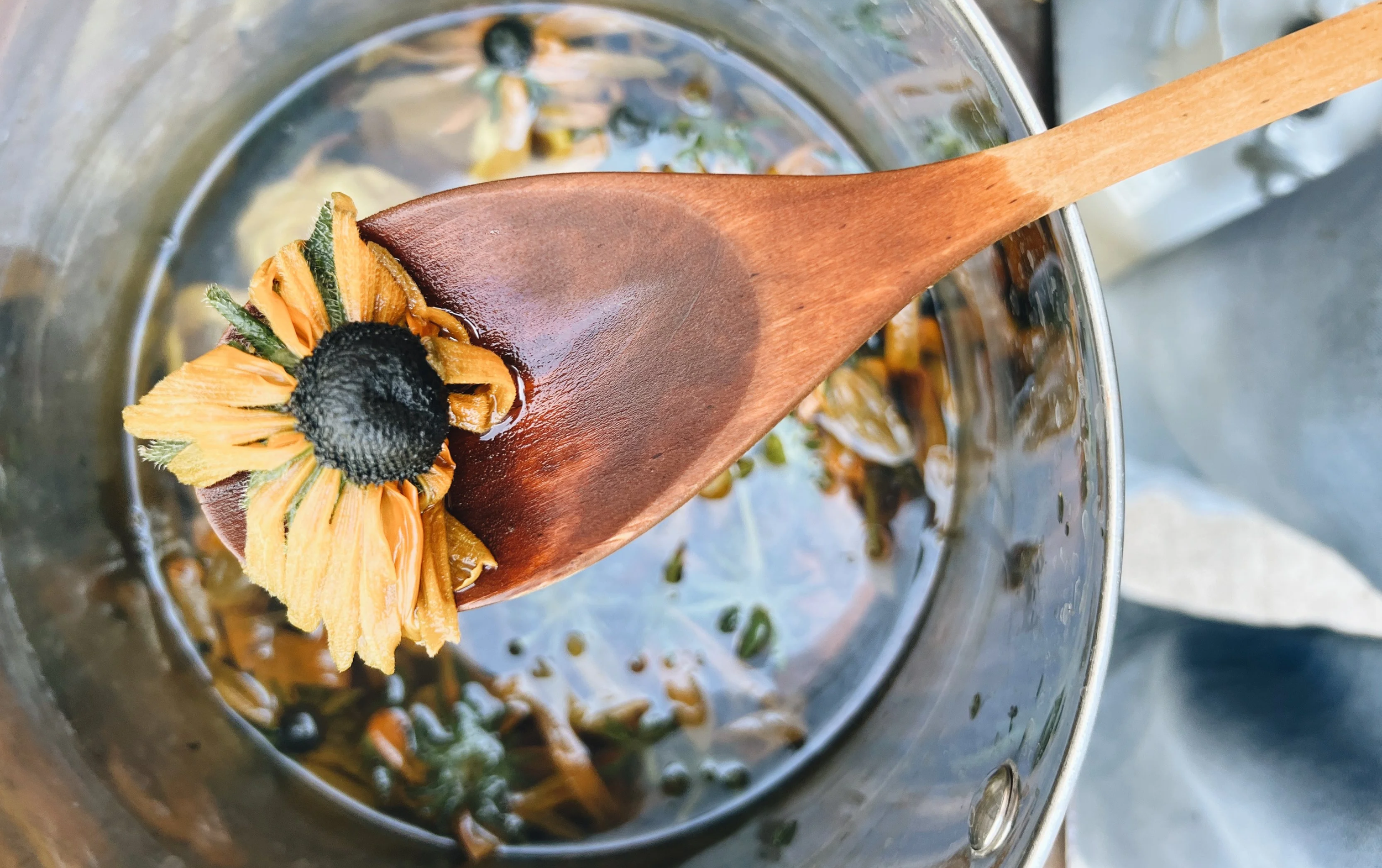
This season I grew four different varieties of Rudbeckia to see if they would yield different natural dye colors. Last season I grew the regular Black Eyed Susan variety alongside the Green Eyes variety, which are both annuals in my agricultural zone. When testing them in the dye pot I discovered that the Black Eyed variety yielded a green-gray shade and the Green Eyes a clear yellow shade. This got me curious!
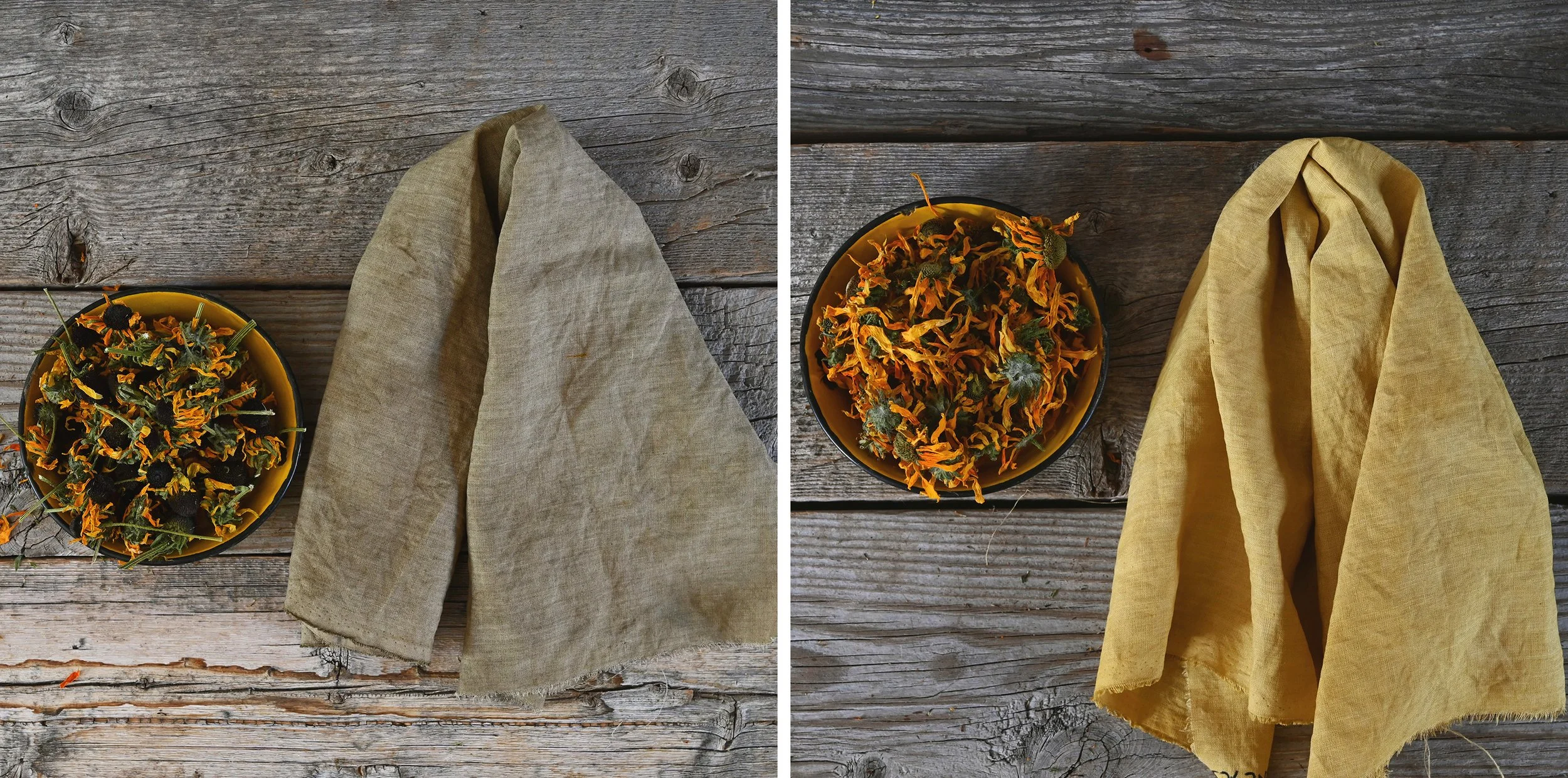
Below is a side-by-side comparison of the dye results I achieved with the Black Eyed Susan variety on the left, and Green Eyes on the right. The fabric is an organic cotton and hemp blend. Both samples were mordanted first with gall tannin at 15% WOF, then potassium aluminum sulfate at 12% and soda ash at 2% WOF. I share my favorite mordanting recipe for cellulose fabric here. To set up a dye bath I used dry flowers at 50% WOF. I added the flowers to the dye baths, then slowly brought the heat up to around 120°F then added the mordanted fabrics. I slowly brought the dye baths to a low simmer and held them there for an hour. The fibers were left to cool in the dye baths for a few hours before removing them.
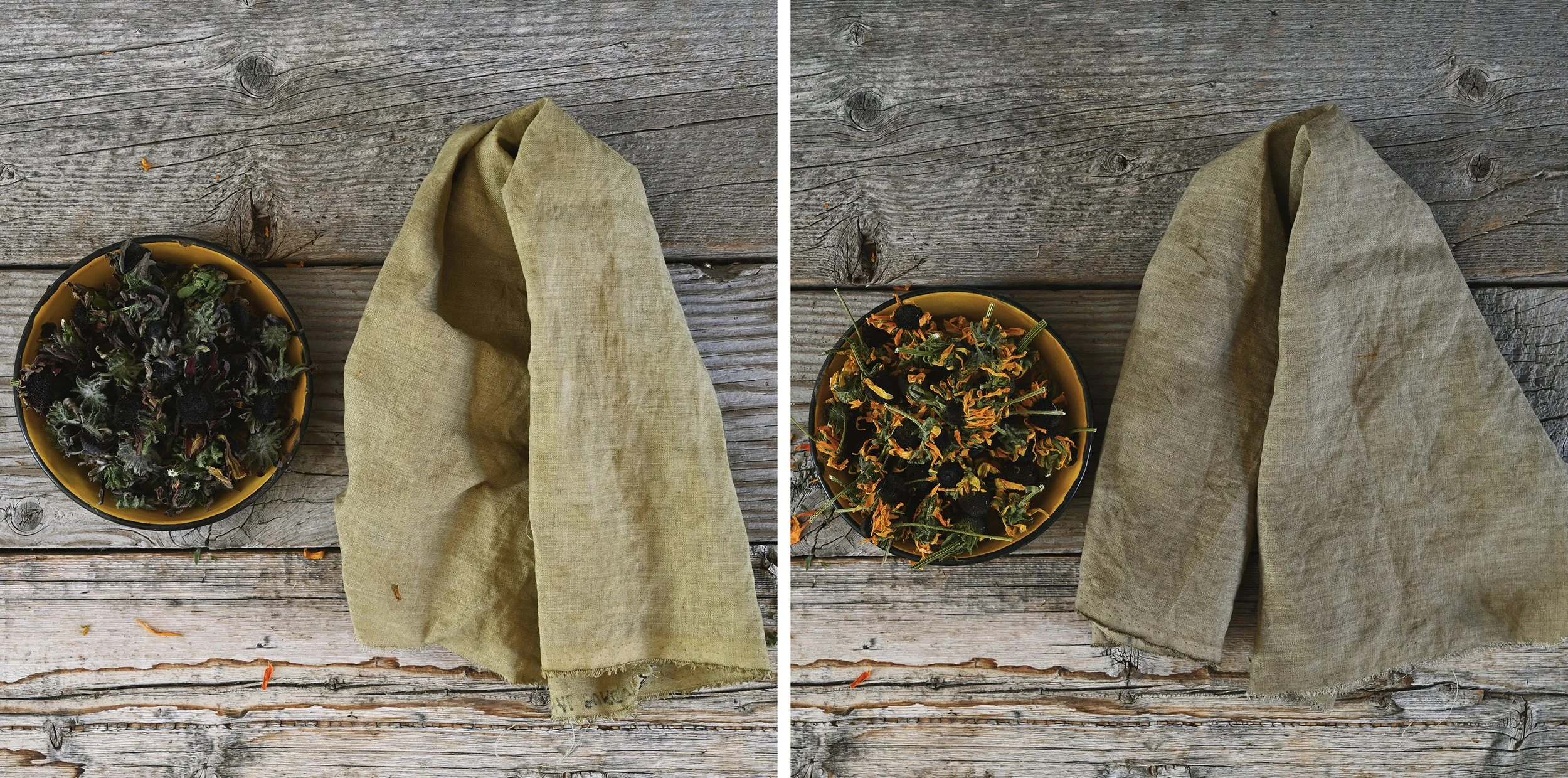
The two new varieties I grew this season are Royal Burgundy and Double Golden Gloriosa, both perennial varieties. Below is a side-by-side comparison of the dye results I achieved with Royal Burgundy on the left and Gloriosa on the right. The shade that Gloriosa yielded is very similar to the regular Black Eyed Susan variety but the other varieties yielded significant differences in shades—more than is showing up in the photos. The fabric, mordanting processes, and dyeing methods I used are the same as the samples above.
I really love the warm green-yellow shade that is achieved by mixing equal amounts of regular Black Eyed Susan (or the Gloriosa variety) with Green Eyes shown below.
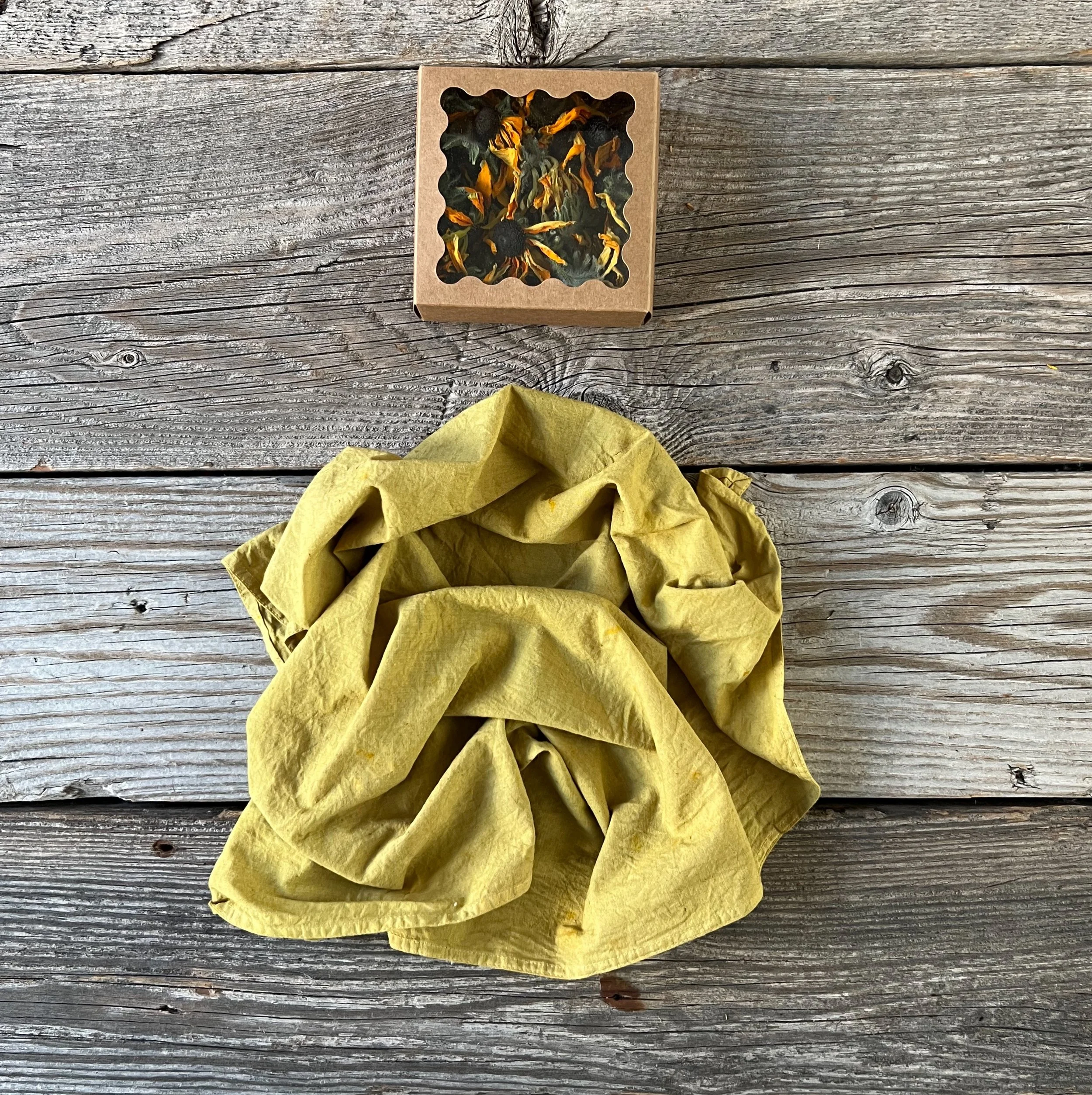
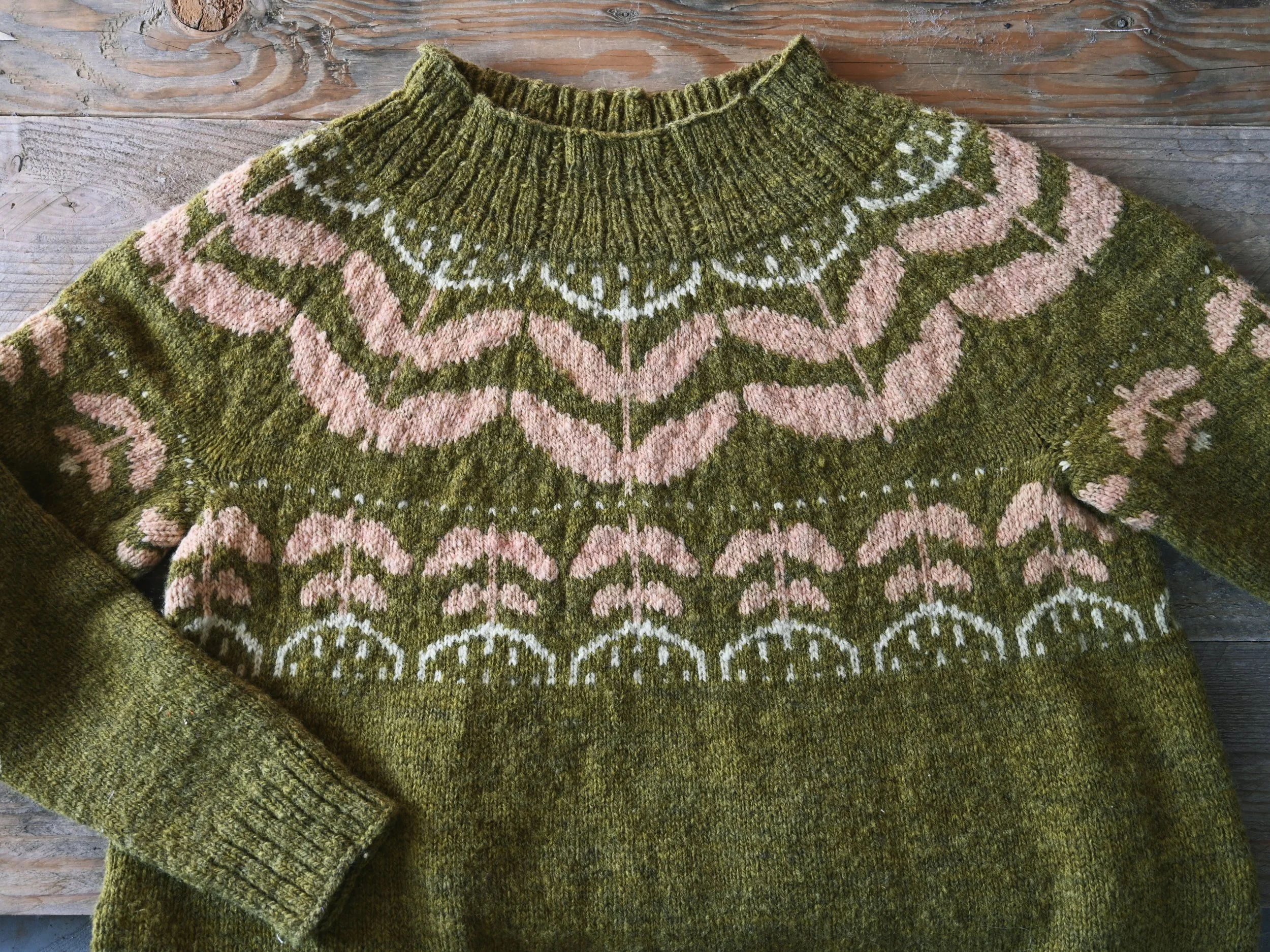
If you’d like to do some Rudbeckia dye experiments of your own I’ve got you covered! You can find all 4 varieties in the shop.

Rudbeckia: Gloriosa
(Rudbeckia hirta)
We’re offering 4 different Rudbeckia varieties this season so be sure to check them all out. This Gloriosa Rudbeckia variety yields beautiful green shades (see photo 3).
Grown, harvested, and cured by Sara here in southwestern Colorado on Ancient Future Farm. Our family has been tending this land and soil with regenerative growing methods since 2005. Our soil is nurtured through extensive cover cropping and our crops are fertilized with compost that we make right here on site. We never use synthetic chemicals such as herbicides, pesticides, chemical fertilizers, or fungicides. Our dye flowers are harvested every day by hand when they reach their optimal potential and then carefully cured in our curing room out of direct sunlight. All of our natural dyestuffs are packaged in heat sealed envelopes to keep them fresh. For best results we recommend using them within a year.
References: