Natural Dyeing with Marigolds
Last winter when I sat by the fire to plan out the coming farm season, I decided to try some new marigold varieties. For the past few years I’ve grown an African Variety that I’m really pleased with but I was interested in trying some different colored varieties to see if they would yield different dye shades. A few weeks ago I tested the different varieties on an organic cotton hemp blend fabric. I mordanted with gall tannin, then alum and soda ash (tutorial here). I set up 4 dye baths with each marigold variety using marigolds at 35% in each bath. I was happy to discover that the different marigold varieties each yielded a slightly different shade.

On the left Court Jester marigolds yielded a buttery yellow shade, Burgundy Bliss marigolds yielded a green-yellow shade, Strawberry Blonde marigolds yielded a sweet canary yellow color, and the African marigolds yielded a darker yellow.

An after dye ferrous bath at 3% WOF shifted the African marigold yellow to an olive green- gray. I’m so happy with these shades and I’m looking forward to experimenting more with them on wool yarn. I’ll be sure to share the results here!
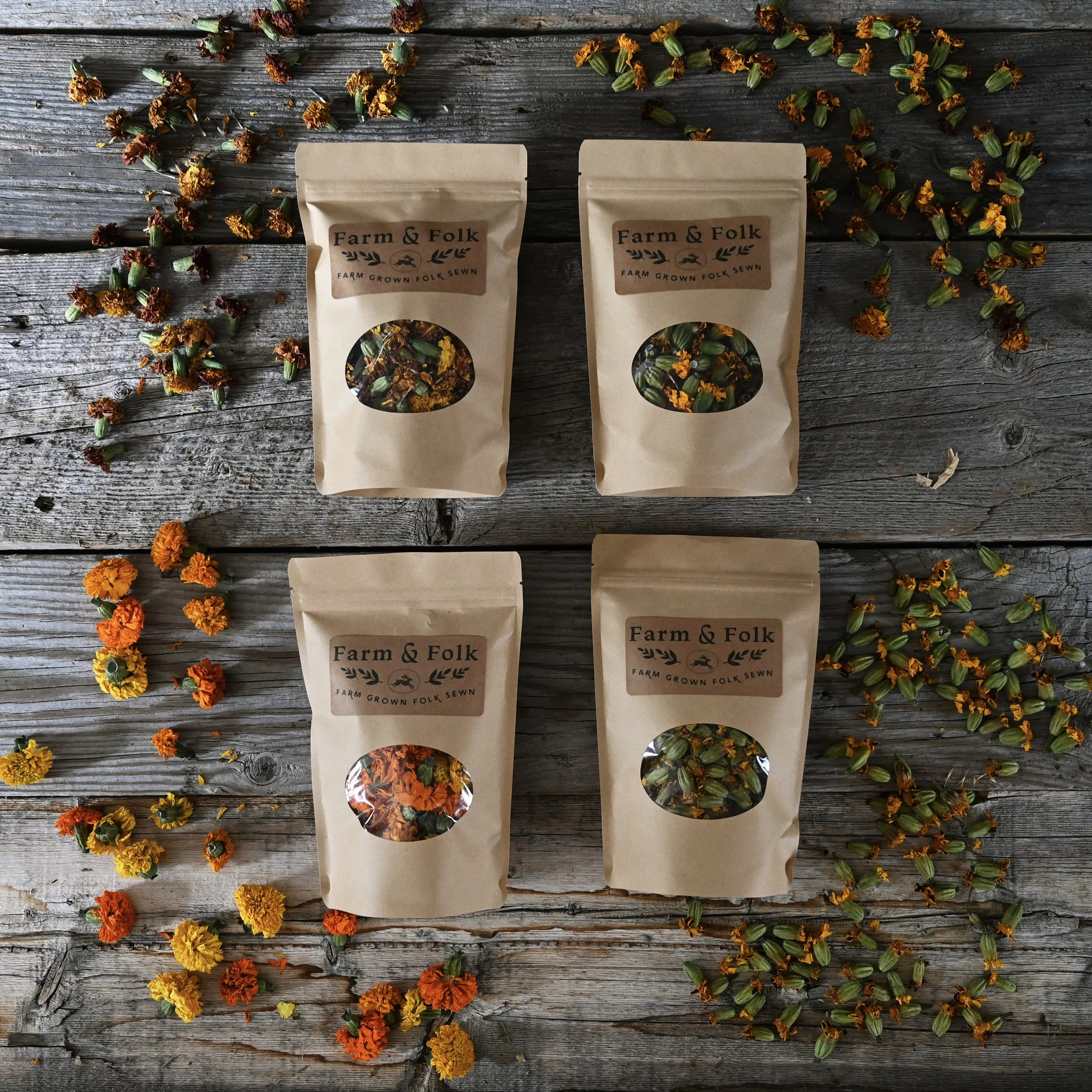
All four of the marigold varieties we grow! This bundle includes our regular bright dense Mexican marigolds, Strawberry Blonde, Court Jester, and Burgundy Bliss. The packs are 30-35 grams each (130 grams total). Enjoy experimenting with these different varieties which yield subtly different dye shades ranging from buttery yellow, to canary yellow, to yellow-green, to the typical strong golden marigold yellow. Olive greens can be achieved by using a dark tannin base on cellulose fibers or by over dyeing natural gray sheep’s wool. See the blog post linked below for more information.
RESOURCES:
Grown, harvested, and cured by Sara here in southwestern Colorado on Ancient Future Farm. Our family has been tending this land and soil with regenerative growing methods since 2005. Our soil is nurtured through extensive cover cropping and our crops are fertilized with compost that we make right here on site. We never use synthetic chemicals such as herbicides, pesticides, chemical fertilizers, or fungicides. Our dye flowers are harvested every day by hand when they reach their optimal potential and then carefully cured in our curing room out of direct sunlight. All of our natural dyestuffs are packaged in heat sealed envelopes to keep them fresh. For best results we recommend using them within a year.