Natural Dye Cultivation Series: Black Scabiosa

I grew Black Scabiosa for the first time last season and fell a little bit in love with it. The long, thin, curly stems and the pollinator-attracting flowers swaying in the breeze were too good. Scabiosa is a welcome addition as a row crop here going forward. The variety I grew was called Black Knight but I’ve noticed other varieties such as the heirloom variety Dark Night. Scabiosa is also referred to as Black Pincushion by some. The Latin name, Scabiosa atropurpurea is the same regardless of the common name.
Quick Facts:
Annual
Germination: 10-12 days
Seed planting depth: on the surface or very lightly buried
Light: full to part sun
Spacing: 12”
Days to flower from seed: 90 days
Height: 24-30”

pollinators enjoying the Black Scabiosa blooms
CULTIVATION
I started the scabiosa seeds indoors about 6 weeks before our average last frost date. The seeds prefer light to germinate so bury them only slightly. Once the danger of frost had passed I transplanted the seedlings out to the garden rows, spacing them about 10” apart. The seedlings acclimated nicely ,and rather quickly began to put on a lot of growth.

HARVESTING
As soon as I noticed the first blooms in late July, I began harvesting them to promote more blooms. The plants were good producers but not as prolific as the Dyer’s Coreopsis or Sulfur Cosmos. Next year I’ll grow at least twice as many scabiosa plants as I did last season. To promote maximum blooms I harvested the flowers 2-3 times per week while they were blooming, all the way up to our first frost.
I hope to write a blog post soon explaining how to dye with Black Scabiosa so stay tuned. If you want to grow your own be sure to check out our shop to see all the dye plant seeds and dyestuffs we offer!

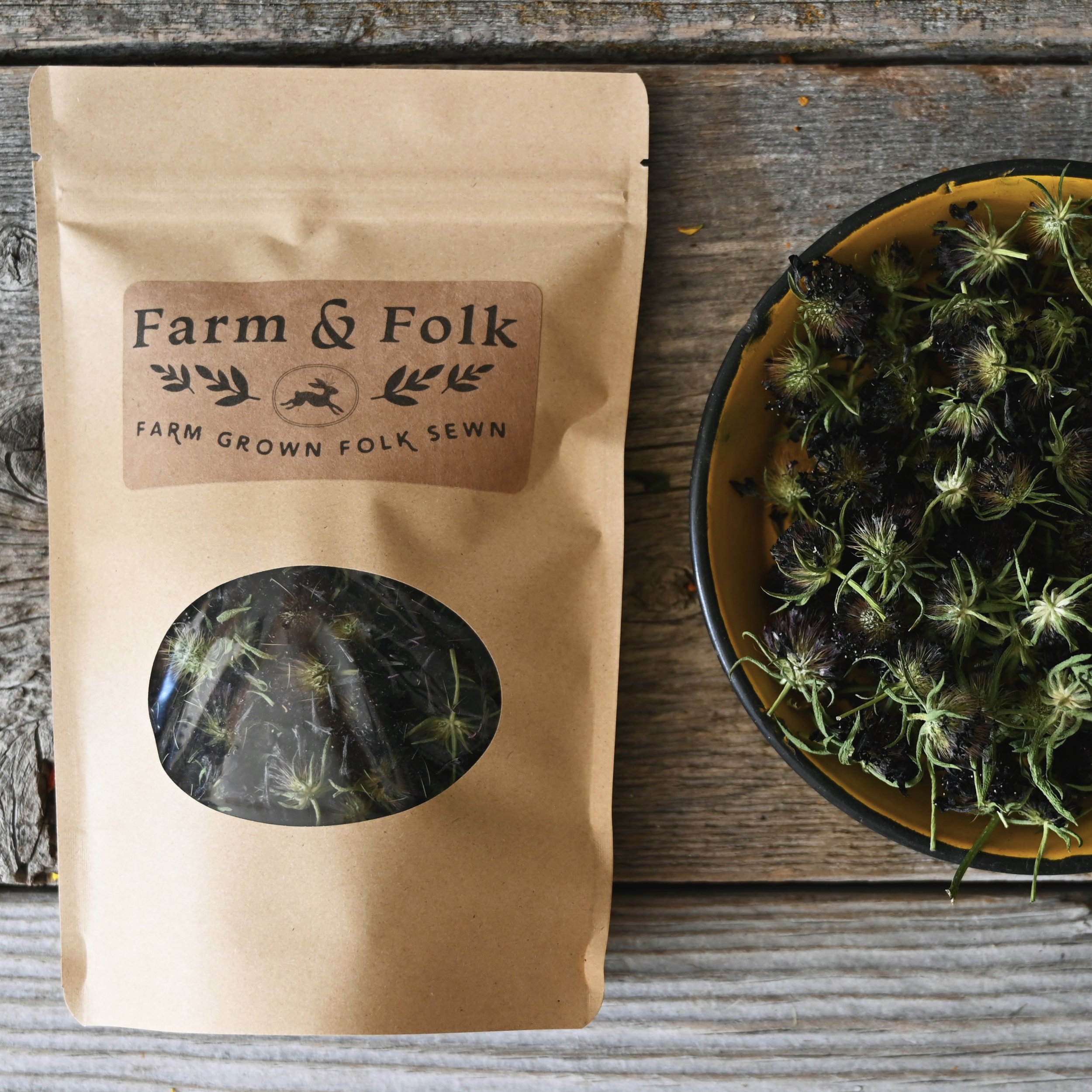
Black Scabiosa
(Scabiosa atropurpurea)
These are potent little dye flowers! They yield beautiful surprising shades from minty and sage greens to bright and dark greens depending on the fiber type and mordant used. They can be used for bundle dyeing and eco-printing experiments or to create an immersion dye bath. See my resource links below.
Available in 2 sizes this year! Choose from a 30 or 60 gram pack in the dropdown menu.
Grown, harvested, and cured by Sara here in southwestern Colorado on Ancient Future Farm. Our family has been tending this land and soil with regenerative growing methods since 2005. Our soil is nurtured through extensive cover cropping and our crops are fertilized with compost that we make right here on site. We never use synthetic chemicals such as herbicides, pesticides, chemical fertilizers, or fungicides. Our dye flowers are harvested every day by hand when they reach their optimal potential and then carefully cured in our curing room out of direct sunlight. All of our natural dyestuffs are packaged in heat sealed envelopes to keep them fresh. For best results we recommend using them within a year.
Resources: